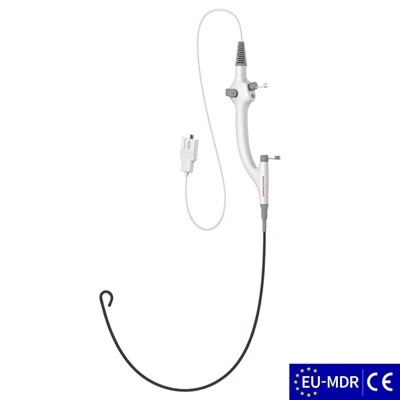
Single-use ureteroscope refers to a kind of medical instrument used for examining and treating the urinary system of patients. It is also known as a single-use ureteroscope, which means that it is disposed of after Single-use use to avoid cross-contamination and ensure the safety of patients.
Compared with conventional ureteroscopes, Single-use ureteroscopes are more flexible, smaller in size, and easier to operate. They are mainly composed of a light source, an insertion tube, and a bending section. The insertion tube is made of biocompatible materials and can be easily inserted into the patient's ureter, which is a tube that connects the kidney to the bladder.
The main advantage of Single-use ureteroscopes is that they eliminate the risk of infection and save time and money associated with sterilization. They are also cost-effective as they do not require costly maintenance or repairs. Moreover, they offer high-quality imaging and allow doctors to perform accurate diagnosis and treatment on the urinary system.
Single-use ureteroscopes are commonly used in the treatment of kidney stones, urinary tract infections, and tumors in the urinary tract. They are also beneficial in the diagnosis of diseases such as bladder cancer and kidney disease.